Belsize Park rubbish removal guide Haverstock Hill homes
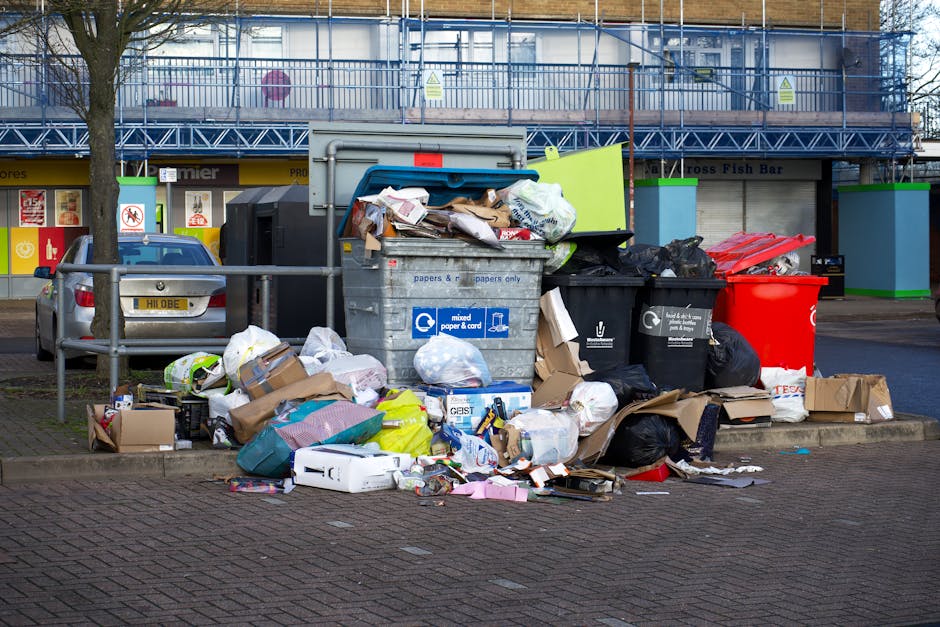
If you live on Haverstock Hill, rubbish has a way of building up quietly. A broken wardrobe sits in the hallway for a week, a few black bags wait by the door, and suddenly the flat feels smaller than it should. This Belsize Park rubbish removal guide Haverstock Hill homes is here to make the whole process feel less awkward and far more manageable.
Whether you are clearing a compact apartment, sorting out a family house, or dealing with leftover waste after a renovation, the right approach saves time, reduces stress, and helps you avoid mistakes that can become costly. In practical terms, that means knowing what can be removed, what should be recycled, how to prepare for collection, and when a professional service is worth it. Simple enough on paper. In real life? Not always.
This guide walks you through the essentials in plain English, with local realities in mind. You will find practical steps, common pitfalls, a comparison of removal methods, and a realistic example of how a clearance might go from cluttered chaos to a clean finish in one afternoon.
- Why it matters in Belsize Park and Haverstock Hill
- How rubbish removal works
- Key benefits and practical advantages
- Who this is for and when it makes sense
- Step-by-step guidance
- Expert tips for better results
- Common mistakes to avoid
- Tools, resources and recommendations
- Law, compliance, standards and best practice
- Options, methods and comparison table
- Case study or real-world example
- Practical checklist
- Conclusion
- Frequently asked questions
Why Belsize Park rubbish removal guide Haverstock Hill homes Matters
Haverstock Hill has a mix of property types, from purpose-built flats and converted houses to larger homes with lofts, garages and small gardens tucked behind them. That variety matters, because rubbish removal is never quite one-size-fits-all. A second-floor flat with a narrow stairwell creates different problems from a family house with a basement full of old furniture. And let's face it, London parking never makes things easier.
Good rubbish removal is about more than getting rid of "stuff". It affects how safely you can move around your home, whether builders can work efficiently, and how quickly you can reclaim valuable space. It also affects your peace of mind. A cluttered room tends to feel louder somehow. You notice every bag, every box, every loose end.
For local homes, the practical stakes are higher because access is often tight, loading space can be limited, and waste may include mixed materials such as furniture, appliances, cardboard, and renovation debris. When you understand the job properly, you can plan the right removal method rather than just hoping for the best. That is usually where the savings start.
If you are dealing with more than a few bulky items, it can help to look at a broader waste removal service alongside more specific options such as furniture disposal or house clearance. The right fit depends on volume, item type and how quickly you need the space cleared.
How Belsize Park rubbish removal guide Haverstock Hill homes Works
In simple terms, rubbish removal follows three stages: assess, remove, and sort. The assessment stage is where the real value starts. A good plan identifies what needs removing, where it is located in the property, whether any items need dismantling, and what can be reused or recycled. That bit sounds dull, but it is often what separates a smooth clearance from a chaotic one.
For most Haverstock Hill homes, the process usually begins with a quick description or quotation. You explain what needs clearing. The service then estimates the volume, access conditions, and labour required. If the job is straightforward, collection can often be arranged fairly quickly. If there are stairs, heavy items, or mixed waste from a refurb, a more detailed view helps avoid surprises on the day.
On arrival, the team normally separates reusable items, recyclable materials, and general waste. Bulky furniture may be lifted out in sections. Bagged rubbish is loaded safely. If the job involves renovation leftovers, dedicated clearance of plasterboard, timber, packaging or old fittings may be needed. For that kind of work, a service like builders waste clearance is often a better match than a general tidy-up.
Homes in Belsize Park often have one practical challenge in common: access. A van may need to park carefully, items may need to be carried a long way, and fragile hallways deserve a bit of protection. It is not complicated, but it does reward a calm, organised approach. A rushed one can get messy fast.
Key Benefits and Practical Advantages
People usually think rubbish removal is just about convenience. Fair enough. But the benefits go a bit further than that.
- More usable space: Clearing one room can change how the entire home feels, especially in smaller flats.
- Less manual labour: Heavy lifting, awkward staircases and repeated trips to a tip are exhausting. Honestly, no one misses that part.
- Faster turnaround: If you need a room ready for decorating, moving, renting or selling, removal can speed everything up.
- Better sorting: Reuse and recycling are easier when the job is handled in one organised flow.
- Reduced risk of damage: Large items moved correctly are less likely to scratch walls, dent doors or break floors.
- Less emotional load: Clearing after a move, bereavement, or long period of accumulation is often easier with practical help.
There is also a small but important mental benefit. Once the clutter goes, you tend to make better decisions about the rest of the home. That spare corner becomes a desk. The guest room becomes usable again. The garage stops being a graveyard for half-finished projects.
For many households, combining a general home clearance with targeted removal of old pieces through furniture clearance gives the cleanest result. If you are dealing with a whole-property reset, a more complete house clearance may be the smarter route.
Who This Is For and When It Makes Sense
This guide is useful for a lot of people, but especially if you recognise one of these situations:
- You are moving out and need to clear unwanted items before handover.
- You have inherited a property and need a respectful, practical emptying process.
- You are renovating and have old fixtures, packaging, or rubble-like waste to remove.
- You run a small business from home and need office clutter or equipment removed.
- You are dealing with a flat where bulky items simply cannot be taken down the stairs alone.
- You have a garage, loft, or garden area that has quietly filled up over the years.
There is a point where doing it yourself stops being frugal and starts being inefficient. A couple of bin bags and a few cardboard boxes? Fine. But if you are looking at old wardrobes, broken shelving, mixed rubbish and a set of stairs that seem to get narrower each year, professional help starts to make sense very quickly.
For lofts, garages and those odd in-between spaces that swallow things whole, dedicated services such as loft clearance and garage clearance can be especially useful. And if the job is mainly old tables, chairs or sofas, keep furniture disposal in mind rather than treating everything as generic waste.
Step-by-Step Guidance
Here is a sensible way to approach rubbish removal in a Haverstock Hill home without turning the whole thing into a weekend ordeal.
- Walk the property first. Make a quick list of what needs to go. Include awkward items, anything heavy, and anything that may need dismantling.
- Separate by category. Put furniture, bagged rubbish, garden waste, DIY debris, and reusable items into rough groups. You do not need museum-level order. Just enough structure.
- Check access. Measure doorways if needed, note narrow staircases, think about parking, and identify whether any items must be taken through the front or rear entrance.
- Decide what should stay. This sounds obvious, but it is the step people regret skipping. Ask yourself: will I still want this in six months?
- Request the right service. If the load is mainly general household waste, one approach works. If it is furniture, builders waste, or office items, choose accordingly.
- Prepare the space. Clear small items from around the larger waste so the removal team can work safely and quickly.
- Keep fragile or personal items separate. Important papers, valuables, medicines and sentimental pieces should be boxed and moved out of the way beforehand.
- Be ready for loading day. It helps if someone can answer questions on arrival. Otherwise things tend to stall for silly reasons.
If you want a more structured option for a complete property reset, many people pair this approach with a flat clearance or a more general home clearance. That is especially practical in converted properties where every item has to be carried carefully through shared spaces.
Expert Tips for Better Results
After enough clearances, a few patterns become obvious. The same small decisions save the most time.
- Group items by effort, not by room. Heavy things, fragile things, and loose rubbish each need different handling.
- Take photos before you book. A few clear images usually help far more than a long description.
- Leave a walkway. Even a narrow clear path makes loading safer and quicker.
- Ask about recycling and reuse. It is a sensible question and usually worth asking. Good services should be able to explain how waste is handled.
- Don't overfill bags. Overpacked bags split at the worst possible moment. It always happens at the top of the stairs, of course.
- Think about sequencing. Clear the biggest items first, then the small waste, then the dust and leftovers.
One small but useful habit: stand in each room and ask what would make it easier to move through. You may notice a chair blocking a cupboard, or a stack of boxes hiding another load behind it. Those little discoveries are often where the extra value sits.
For business owners working from home or storing stock, a separate business waste removal approach can make more sense than mixing home clutter with work waste. It keeps the process clearer and usually more efficient too.
Common Mistakes to Avoid
Most clearance headaches come from a few predictable mistakes. The good news is that they are easy to avoid once you know them.
- Leaving sorting until collection day: That creates delays and often increases the amount of labour needed.
- Ignoring access issues: Narrow stairs, parked cars, or restricted entrances can change the whole job.
- Mixing different waste types without checking: Builders debris, electrical items, garden waste and household rubbish may need different handling.
- Forgetting what is reusable: Some items are worth keeping, donating elsewhere, or separating for recycling.
- Choosing the wrong service scope: A light domestic tidy-up is not the same as a full property clearance.
- Assuming everything can go in one load without discussion: It often cannot, or not safely.
Another common issue is underestimating the emotional side. Clearing a long-owned home can be exhausting in a way that is not just physical. If you are sorting through years of belongings, give yourself more time than you think you need. That is not weakness. It is just real life.
Tools, Resources and Recommendations
You do not need much equipment for a basic clearance, but the right few things make a noticeable difference.
- Heavy-duty bin bags: Useful for loose waste, textiles and smaller mixed items.
- Marker pen and labels: Helpful when separating keep, recycle and remove piles.
- Protective gloves: Handy for lofts, garages and old storage areas where dust and sharp edges appear out of nowhere.
- Strong boxes: Better than flimsy bags for books, small appliances or personal papers.
- Basic dismantling tools: A screwdriver or Allen key may help reduce the size of larger furniture.
For people wanting a cleaner, more organised property-level approach, it often helps to combine a few services rather than forcing one service to do everything. That might mean using house clearance for the main load, garage clearance for outdoor storage, and recycling and sustainability information to better understand how materials are handled.
And if you are comparing providers, do not just look at speed. Look at clarity, safety, and whether they explain the process properly. A clear answer is often worth more than a quick promise.
Law, Compliance, Standards and Best Practice
When rubbish removal involves homes in London, the practical side is only half the story. The compliance side matters too, especially where waste is being carried away, sorted, or transferred. You do not need to become a legal expert, but it is wise to use a service that understands responsible waste handling and follows normal UK best practice.
At a basic level, waste should be handled safely, kept separate where practical, and taken to appropriate facilities by people who know what they are doing. Mixed waste, electrical items, sharp materials, and construction waste all deserve proper handling. That is partly about safety and partly about environmental responsibility.
For homeowners, the practical takeaway is simple: don't hand waste to anyone who cannot explain where it is going or how it is managed. If a company can talk clearly about safety, insurance, and recycling, that is usually a good sign. If it gets vague, be cautious. Very cautious.
It also helps to look for transparent policies around service terms, payment, and safety. Useful references on a provider website can include insurance and safety, health and safety policy, payment and security, and terms and conditions. These pages are not glamorous, true, but they do say a lot about how a business operates.
For more context on how the company presents itself and what it aims to do, it can also be useful to read the about us page. That sort of background often makes it easier to judge whether a service feels like a good fit.
Options, Methods, or Comparison Table
There is more than one way to clear rubbish from a Haverstock Hill home. The right choice depends on time, volume and how much lifting you want to do yourself. Here is a practical comparison.
| Method | Best for | Pros | Trade-offs |
|---|---|---|---|
| Self-clearance | Small amounts of bagged waste or a few easy-to-move items | Low direct cost, full control | Time-consuming, physical effort, transport and disposal hassle |
| Skip-style approach | Longer DIY jobs or renovation waste in one place | Handy for ongoing projects, simple on-site storage | Space-heavy, access and permit considerations, not ideal for tight streets |
| Professional rubbish removal | Bulky items, mixed waste, fast turnaround, limited access | Less lifting, quicker clearance, organised sorting | Higher upfront cost than doing it all yourself |
| Specialist service | Furniture, lofts, garages, offices or builders waste | Tailored handling, better efficiency for specific waste types | May need more detailed booking information |
In many homes, the best answer is a mix. For example, you might keep sentimental items, self-handle a few small bags, and bring in a team for the bulky bits. That kind of blended approach is often the most sensible, even if it feels slightly unglamorous.
Case Study or Real-World Example
Here is a realistic example from the kind of job that comes up often in this part of London. A family in a converted flat off Haverstock Hill had a spare room that had turned into a holding area for an old sofa, three broken chairs, a dismantled desk, six bags of mixed household waste, and a stack of cardboard that had been there so long it practically had its own postcode.
The first challenge was access. The stairwell was narrow, the lift was not available, and the sofa had to be split down before it could move. Nothing dramatic, just the normal small frustrations that come with older properties. The second challenge was deciding what could go and what should stay. Once that was done, the room emptied faster than the family expected.
The removal team handled the bulky furniture separately from the bagged waste, protected the corners on the way out, and left the area clear enough for the family to decorate the next day. No magic, no miracle. Just a tidy plan and a sensible sequence.
What made the difference was preparation. The family had already set aside items to keep, identified the heaviest objects, and chosen the right type of service rather than trying to solve everything at once. That made the whole thing feel manageable instead of overwhelming. Which, to be fair, is exactly what most people want.
Practical Checklist
Use this quick checklist before you book or begin a clearance.
- Identify exactly what needs removing.
- Separate keep, donate, recycle and remove piles.
- Take photos of bulky or awkward items.
- Check stairs, lifts, doors and parking access.
- Note any fragile surfaces or tight hallways.
- Choose the right type of clearance for the waste involved.
- Set aside valuables, documents and medication.
- Ask about recycling, reuse and disposal handling.
- Confirm timing and who will be present on the day.
- Keep pathways open so the work can be done safely.
Expert summary: the most efficient rubbish removal jobs are the ones where the property owner does a little sorting first. You do not need perfection. You just need enough clarity to avoid confusion. That single bit of preparation can save more time than most people expect.
Get a free quote today and see how much you can save.
Conclusion
Rubbish removal in Belsize Park and along Haverstock Hill is rarely just about waste. It is about space, safety, time, and the relief that comes when a home finally feels manageable again. Some jobs are small and quick. Others need a bit more thought, especially in flats, converted houses, and older properties with awkward access. Either way, a calm plan makes the whole thing easier.
If you remember just one thing, make it this: sort first, choose the right service for the job, and don't leave the hard stuff until the last minute. That's where most of the stress hides. Not in the rubbish itself, but in the rush around it.
And when the last bag is gone and the hallway looks wider than it did that morning, you will know it was worth doing properly. A small reset, maybe, but sometimes that is exactly what a home needs.
Frequently Asked Questions
What does a rubbish removal service usually take from Haverstock Hill homes?
Most services can handle general household rubbish, old furniture, broken household items, bagged waste, and some renovation debris. If you have electricals, specialist materials, or mixed bulky waste, it is best to describe those clearly before booking.
Is rubbish removal better than hiring a skip for a flat?
For many flats, yes. A removal service is often easier because you do not need to find space for a skip, manage loading yourself, or deal with access issues for long periods. If you only have a small amount of waste, though, a skip is not always necessary either.
How do I know whether I need house clearance or waste removal?
If you are dealing with a whole property or multiple rooms, house clearance may fit better. If the job is mainly mixed rubbish or a single load of items, waste removal might be the better match.
Can furniture be removed from upper floors safely?
Yes, in most cases it can, provided the access is assessed properly first. Narrow staircases, tight corners and delicate walls need care. Large items are often dismantled or moved in stages to reduce risk.
What should I do before the team arrives?
Separate the items to be removed, make sure valuables are out of the way, and clear a path where possible. If you can group items by type, that helps too. The smoother the access, the smoother the whole job tends to be.
How long does a typical clearance take?
It depends on volume, access, and how much sorting is involved. A small load may be quick, while a full flat or house can take longer. The main thing is that good preparation usually shortens the job more than people expect.
Can old loft or garage clutter be cleared in one visit?
Often yes, especially if the items are well described and access is straightforward. For bigger or more awkward spaces, it may help to use a dedicated loft clearance or garage clearance service so the job is planned correctly from the start.
Do rubbish removal teams recycle items?
Responsible providers should aim to reuse or recycle materials wherever practical. The exact handling depends on the waste type, condition of the items, and the facilities available. It is sensible to ask how waste will be sorted before you book.
What if I only need a few pieces of furniture gone?
Then a narrower service like furniture clearance or furniture disposal may be enough. You do not always need a full property clearance for a small number of bulky items.
Is it worth using a professional service for a small job?
Sometimes yes, especially if the items are heavy, awkward, or hard to move safely. If you live in a top-floor flat or simply do not want to spend your evening wrestling with a sofa, it can be worth it for the peace of mind alone.
How do I compare providers properly?
Look at clarity, safety, transparency, and whether the service explains how it handles access, waste separation and payment. Pages such as pricing and quotes, insurance and safety, and recycling and sustainability can be useful when you are weighing up your options.
What is the biggest mistake people make with rubbish removal?
Waiting too long to sort and separate items. Once everything is piled together, the job feels bigger, takes longer, and becomes more stressful. A bit of early sorting usually saves a lot of effort later.
Where can I learn more about the company behind the service?
You can start with the about us page and then review practical policy pages such as terms and conditions and health and safety policy. That gives a clearer picture of how the service is run.